Thailand, Japan, and the World — A Connection Most Travelers Never See
When most Americans think about Asia's relationship with Black history, their minds rarely turn to Thailand. Japan is more likely to come to mind, and for good reason. Throughout the twentieth century, Black intellectuals, journalists, educators, and political leaders followed Japan with remarkable attention because its emergence as a modern power challenged assumptions that had long been used to justify colonialism and white supremacy. The victory over Russia in 1905 resonated far beyond East Asia, prompting writers such as W.E.B. Du Bois and Marcus Garvey to ask whether the modern world might develop along a different path than the one Europe had prescribed. For many Black Americans, Japan became more than another country. It became evidence that history was not predetermined.
That intellectual relationship with Japan has been studied for decades, yet it represents only one chapter in a much broader story. During the second half of the twentieth century, another Asian nation quietly entered Black American life through very different circumstances. While Japan inspired political thought and philosophical debate, Thailand became a place experienced firsthand by thousands of Black Americans during the Vietnam War. The relationship that developed there was personal rather than theoretical, and although it receives far less attention today, it continues to shape the way many Black travelers experience Thailand.
Thailand never became a battlefield during the Vietnam War, but it played a critical role in the conflict as one of the United States' principal military partners in Southeast Asia. American air bases at U-Tapao, Korat, Ubon, Takhli, and Nakhon Phanom supported operations throughout the region, bringing hundreds of thousands of American servicemen into the country over the course of the war. Among them were thousands of Black Americans serving during one of the most consequential periods in modern American history, as the Civil Rights Movement transformed the nation they had temporarily left behind.
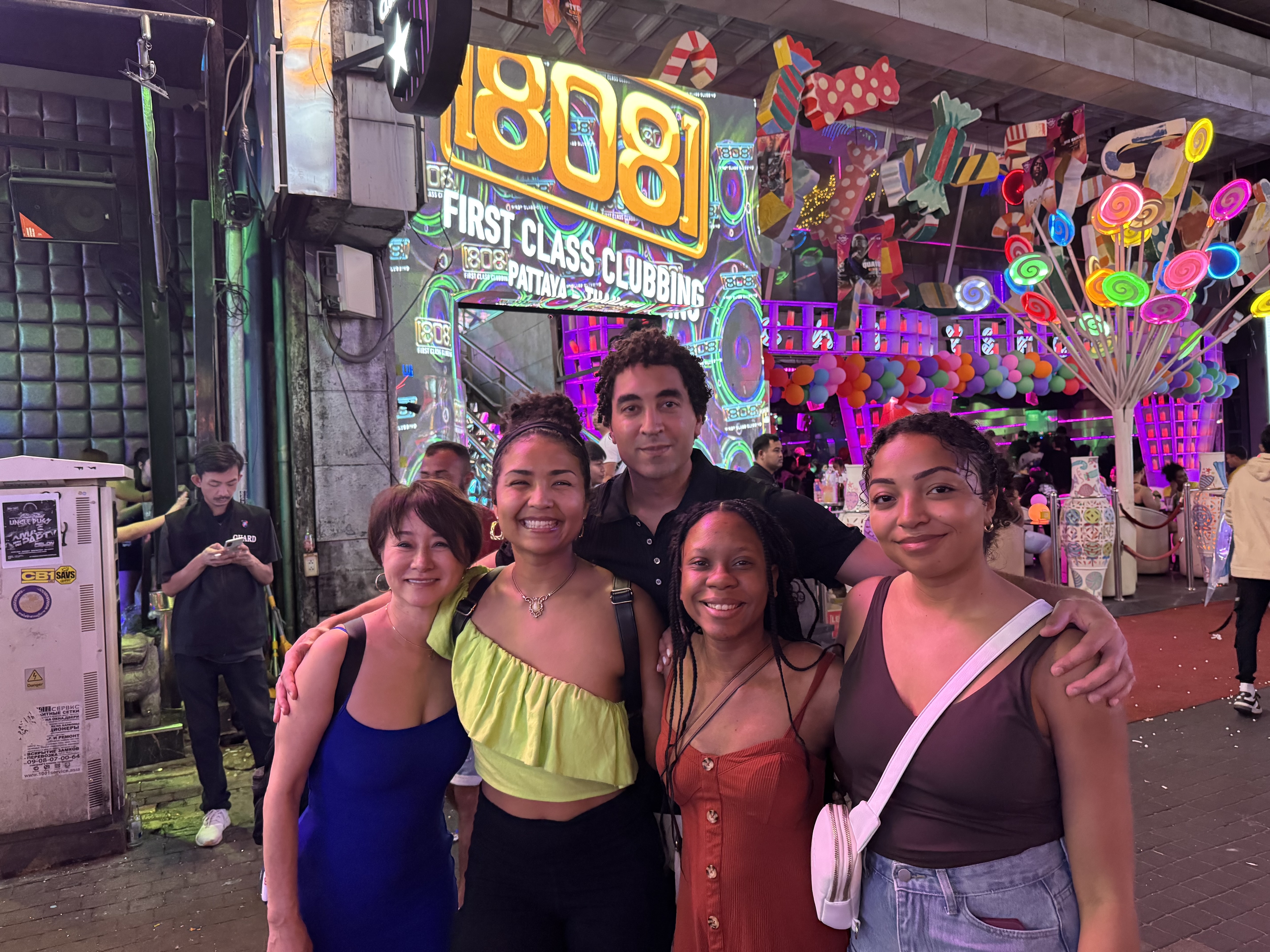
For many veterans, Thailand represented the first opportunity to spend meaningful time living in an Asian society rather than simply reading about one. Friendships developed, cultural barriers fell away, and experiences accumulated that often contrasted sharply with expectations formed before their arrival. Some veterans later returned to Thailand after completing their military service, while others established families and lasting personal connections. Pattaya, which grew rapidly as a rest-and-recuperation destination during the war, would eventually become home to many American expatriates, including Black veterans whose relationship with Thailand began during those years. Although today's Black communities in Thailand are far more diverse than they were half a century ago, that Vietnam-era connection remains an important part of the story.
The influence of those encounters extended beyond individual lives. Black servicemen carried with them jazz, soul, rhythm and blues, and later hip-hop, contributing to cultural exchanges that helped shape Thailand's appreciation of Black American music. In return, many veterans brought home memories of a country that challenged assumptions they had held about Asia. Long before Thailand became a destination promoted by travel influencers or luxury magazines, it already occupied a place in the lived experience of many Black American families.
The royal connection
While this relationship between Black America and Thailand was developing, Thailand itself was strengthening another partnership that remains visible throughout Bangkok today. Thailand and Japan had spent decades building close diplomatic, economic, and cultural ties rooted in a shared experience uncommon in Asia. Both nations had preserved their sovereignty during the colonial era, and both looked to one another as examples of successful modernization without direct European rule. King Chulalongkorn's visit to Japan in 1897 reflected more than diplomatic courtesy; it demonstrated a desire to understand how another Asian nation had modernized while preserving its independence. Over the following century, royal visits, commercial investment, educational exchange, and tourism transformed that relationship into one of the closest bilateral partnerships in the region.
That history explains details that many visitors notice without fully understanding. Japanese businesses are woven into Bangkok's commercial landscape, Japanese visitors are welcomed with a familiarity that reflects generations of exchange, and many of the city's leading hotels employ professionals whose careers have moved naturally between the two countries. At the Grand Hyatt Erawan Bangkok, for example, Executive Chef Senna spent thirteen years working in Osaka and speaks fluent Japanese. Conversations that move comfortably between Thai, Japanese, and English are simply part of daily life, reflecting a relationship that has evolved over more than a century rather than something created for tourists.
One larger story
Viewed separately, these stories appear unrelated. One concerns Black intellectuals looking toward Japan for inspiration during the early twentieth century. Another follows Black American servicemen whose introduction to Thailand came through the Vietnam War. A third traces the enduring relationship between Thailand and Japan. Together, however, they reveal a larger history of connection across the Pacific, demonstrating that Black America's engagement with Asia has never been confined to a single country or a single moment in time.
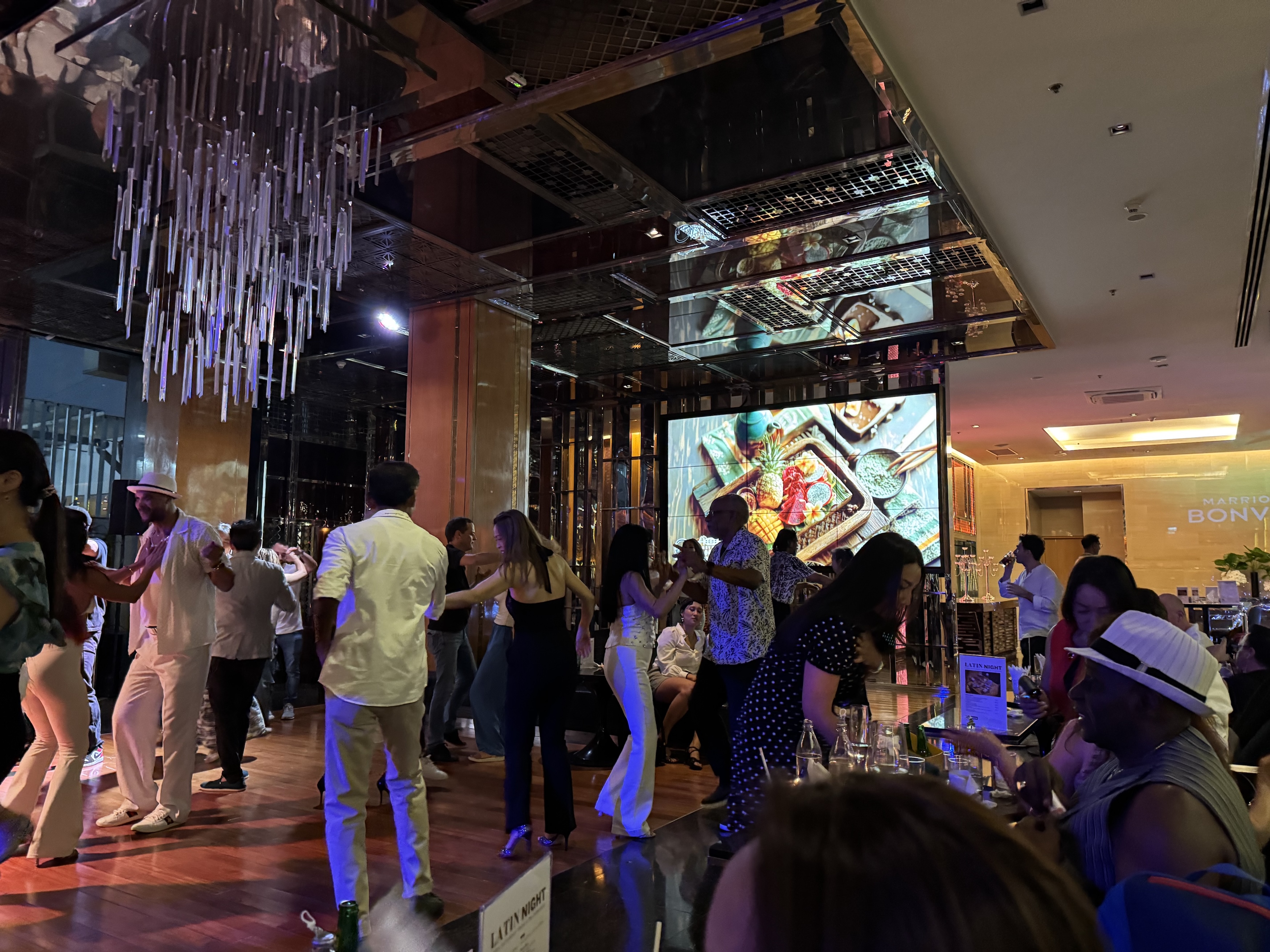
That broader perspective shapes every Blaisian journey. We certainly visit Bangkok's temples, markets, restaurants, and luxury hotels because they are among the finest experiences the city has to offer, but we also explore the histories that give those places greater meaning. Dinner at Qulture Lounge becomes part of a continuing story about the Black diaspora in Thailand. A conversation with Chef Senna reflects more than an accomplished culinary career; it illustrates the remarkable relationship between Thailand and Japan. Even a walk through the Grand Hyatt Erawan reveals how historical connections continue to influence the present in ways that most visitors never recognize.
Travel is often marketed as an opportunity to see new places, yet the most memorable journeys also change the way we understand familiar histories. For Black American travelers, Thailand is not simply another destination in Southeast Asia. It is part of a larger story that stretches from Du Bois and Garvey's engagement with Japan, through the experiences of Vietnam-era servicemen, to the communities, friendships, and cultural exchanges that continue to connect Black America with Asia today. That is the story Blaisian Journeys seeks to uncover, and it is one that becomes visible only when history and travel are experienced together.
Questions about the journey — historical, logistical, or otherwise — reach me directly.
dwright@blaisian.com